Wet weather, fallen leaves, frost and long periods without use can all take their toll on outdoor furniture. A careful clean, suitable protection and a few regular checks will help keep each piece in good condition until spring.
How to Look After Outdoor Furniture Through a British Winter
A practical guide to cleaning, covering and storing garden furniture, cushions and accessories during a British winter.
·4 September 2026·8 min read
A solid teak garden bench with a naturally weathered silver-grey finish
British winters are often more persistently damp than severely cold. That moisture can encourage staining, corrosion and mildew, particularly when dirt is left in place or furniture is covered before it has dried.
Not every outdoor piece needs to be brought inside, but each one should be prepared according to its materials and the manufacturer’s care instructions. Start before prolonged wet weather arrives, then make brief checks throughout the season.
Winter furniture care at a glance
Clean away leaves, food marks and bird mess before storage or covering.
Allow every surface, joint and cushion to dry completely.
Use breathable, well-fitting covers and secure them against wind.
Store cushions, parasols and textiles in a dry, ventilated indoor space.
Check covers, drainage points and fittings around once a month.
Start with a clean, dry set
Leaves, soil, food residue and bird mess are easier to remove when fresh. If left over winter, they can hold moisture against a surface and cause stubborn marks. Organic debris can also gather around joints, feet and drainage holes, where it slows drying.
Choose a dry day and remove loose dirt with a soft brush. Wash the furniture with mild soapy water and a soft cloth, sponge or non-abrasive brush. Work from the top down, paying attention to the underside of tables, chair arms, joints and the points where legs meet the ground.
Rinse only as directed by the manufacturer and avoid leaving soap behind. Harsh cleaners, scouring pads and pressure washers can damage coatings, force water into joints or lift the fibres of timber. Use a pressure washer only when the manufacturer specifically permits it.
Leave the furniture uncovered until it is dry throughout. Water can remain in frame openings, woven sections and fixings after the main surfaces appear dry. Covering or storing a damp set creates the enclosed conditions in which condensation, mould and corrosion are more likely.
Winter care by furniture material
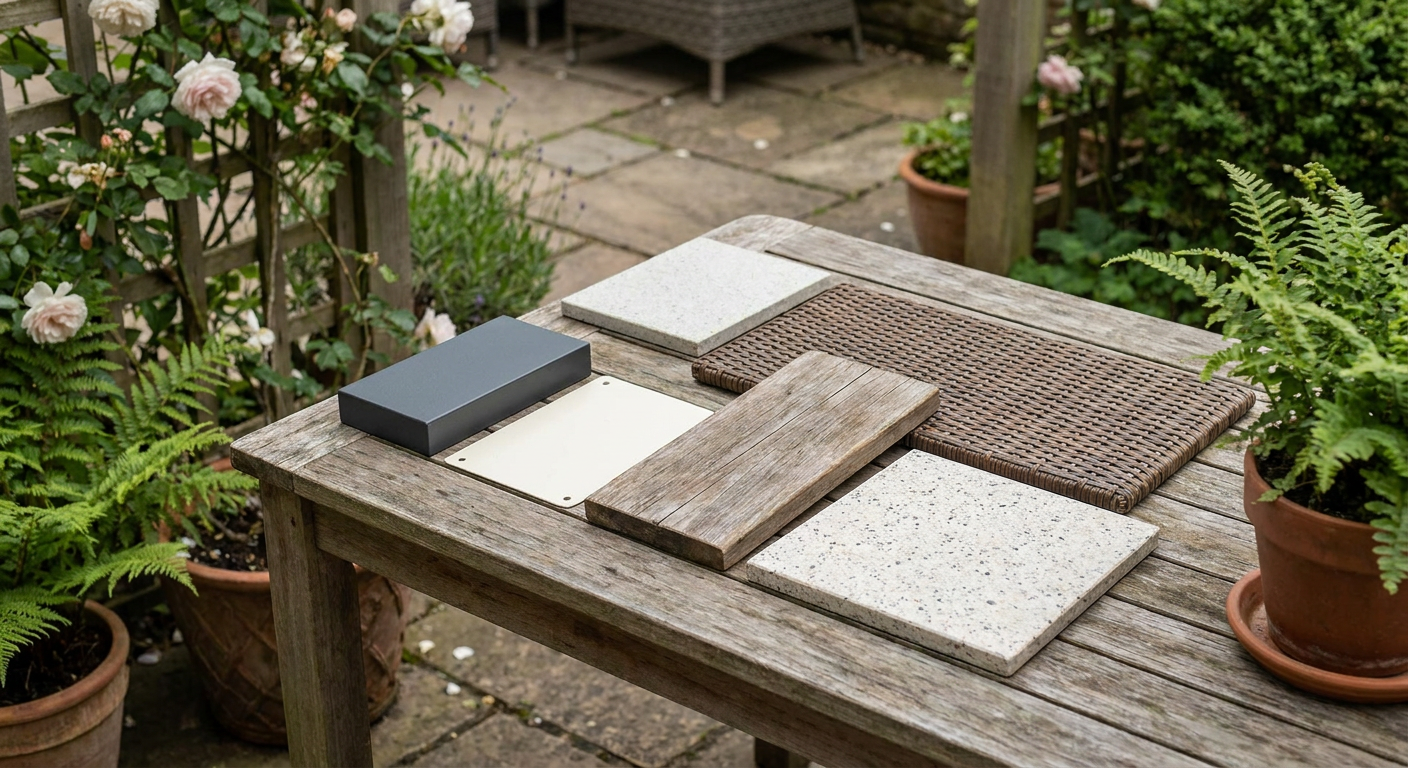
Aluminium
Aluminium does not rust in the same way as steel, but its finish still needs care. Clean the frame, inspect joints and check that drainage holes are clear. Look for chips or scratches in painted or powder-coated surfaces and follow the manufacturer’s guidance for suitable repairs. Avoid abrasive products that may dull or weaken the finish.
Steel
Check steel furniture carefully for chipped coatings, bubbling paint or early signs of rust, particularly around welds, fixings and feet. Treat damage promptly using a product approved for the furniture and its finish. Keep steel feet out of persistent standing water and tighten loose fixings where the care instructions allow.
Teak and other hardwoods
Teak can develop a natural silver-grey appearance outdoors. This colour change is not, by itself, a sign that the timber has failed. Clean along the grain with products and tools suitable for the particular wood.
Use oils, sealers or other timber treatments only if they are recommended for that piece and you want the finish they create. An unsuitable product can alter the colour, encourage patchiness or interfere with an existing coating.
Softwoods
Softwood furniture usually depends more heavily on a protective finish. Inspect exposed end grain, joints and any areas where paint, stain or preservative has worn. Allow the timber to dry before applying an appropriate treatment, following its instructions for temperature and weather conditions.
Synthetic rattan
Remove debris from the weave with a soft brush, then wash gently with mild soapy water. Check for loose strands and inspect the frame beneath where possible. Do not use stiff brushes or aggressive cleaners that could mark or weaken the synthetic fibres.
Plastic
Wash plastic furniture with a soft cloth and mild detergent. Avoid solvents, bleach-based mixtures and abrasive pads unless specifically approved. Cold conditions can make some plastics less flexible, so lift pieces carefully rather than dragging or forcing stacked chairs apart.
Match the care method to the material
A treatment that suits one outdoor surface may damage another. Identify the frame, finish and tabletop material before choosing a cleaner, repair product or timber treatment.
Use outdoor furniture covers properly
A cover should be weather-resistant, breathable and close enough in size that it does not flap excessively in the wind. It should protect the whole piece without trailing on the ground. Use the supplied straps, toggles or ties, and check them after strong winds.
The cover should not press into a shape where rain can collect. If necessary, use a suitable support beneath it to create a gentle slope, taking care not to place sharp pressure on the fabric or furniture. Remove pooled water rather than allowing its weight to stretch the cover.
Airflow matters. Where the cover design allows, leave ventilation points unobstructed and avoid sealing the furniture tightly with non-breathable plastic. On a dry day, lift or remove the cover for a short period. Check the underside for condensation and make sure the furniture remains dry before replacing it.
A cover protects furniture only when it sheds water and allows trapped moisture to escape.
Bring cushions, parasols and textiles indoors
Water-resistant fabric is not necessarily intended for permanent outdoor storage. Repeated saturation, condensation and slow drying can lead to mildew, staining and odours even when a textile copes well with occasional showers.
Brush or vacuum away loose dirt, then clean cushions, parasols, throws and outdoor rugs according to their care labels. Allow them to dry completely, including cushion fillings, piping, seams and parasol folds. Closing a slightly damp parasol or stacking damp cushions can trap moisture deep within the fabric.
Store textiles in a dry, ventilated indoor space. Avoid sheds or garages that are visibly damp or prone to condensation. Do not compress cushions tightly for several months, as this may affect their shape. Sealed plastic bags can also trap residual moisture; use breathable storage where the manufacturer recommends it.
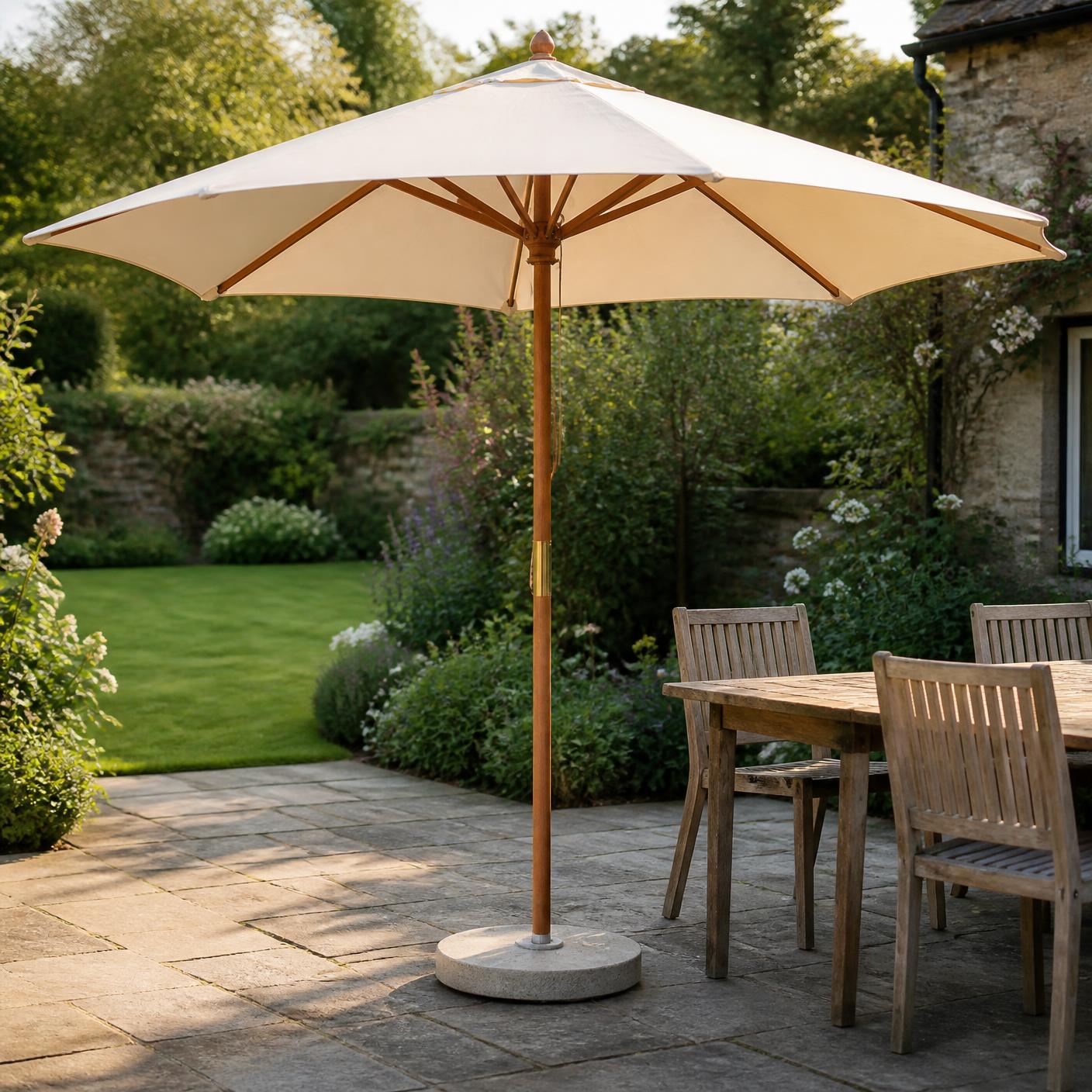
A parasol should be lowered, cleaned and dried before storage. Remove it from its base if the design permits, secure it with its strap and place it somewhere it cannot be bent or knocked over.
Clean and fully dry a parasol before closing it and moving it into winter storage.
Prepare the wider outdoor living area
Winter preparation should extend beyond the main table and chairs. Clean parasol bases and let them dry before storing or covering them as appropriate. Remove barbecue tools and accessories, batteries from suitable portable items, and any lanterns or decorative objects that are not designed to remain outside.
If your table has a removable glass top, consult its care instructions before moving it. Glass should be handled by enough people to support it safely and stored upright or flat only as directed, away from hard edges and unstable stacks.
Secure lightweight furniture so that gusts cannot move it across the patio. Folding or stacking may help if the furniture is designed for it, but do not create a tall, unstable stack. Move pieces away from loose roof edges and overhanging branches where practical.
Clear leaves from drainage openings in frames, planters and the surrounding surface. Check that feet are not sitting in a hollow where water gathers. Moving furniture slightly, or placing it on a stable and suitable surface, can reduce prolonged contact with standing water. Do not use makeshift blocks that make a chair or table unstable.
Position furniture securely and keep feet, fixings and drainage points clear of persistent water and debris.
Make simple checks throughout winter
A short monthly inspection is usually more manageable than dealing with several months of accumulated dirt and moisture in spring. Make an additional check after severe wind or prolonged rain.
Monthly winter checklist
Check that covers are secure, undamaged and still allowing ventilation.
Remove leaves, twigs and standing water from covers and surrounding surfaces.
Look beneath covers for condensation, damp patches, mould or early corrosion.
Make sure drainage holes remain clear.
Check furniture feet and nearby paving for persistent standing water.
Tighten loose fittings only where appropriate, using the correct tool and the manufacturer’s guidance.
Air covered furniture and stored textiles during suitable dry weather.
Bringing furniture back into use in spring
Remove covers on a dry day and inspect each piece before sitting on it or moving it. Clean away winter dirt, check frames, joints and fixings, and look for corrosion, cracked timber, damaged weaves or unstable feet. Allow everything to dry before replacing cushions.
Open parasols carefully and examine the canopy, ribs, pole and operating mechanism. Check removable glass tabletops for edge damage before refitting them as instructed. If a chair, table or accessory appears structurally unsound, stop using it until it has been assessed or repaired.
Winter outdoor furniture care questions
Prepare your outdoor space for the season
Explore garden furniture and outdoor living pieces, with material and care information to help you choose what suits your space.